The French Press: What Changes When the Plunge Waits
Compare an early, usual, and delayed plunge to understand how steeping time changes a French press cup—and choose by taste, not by a fixed rule.
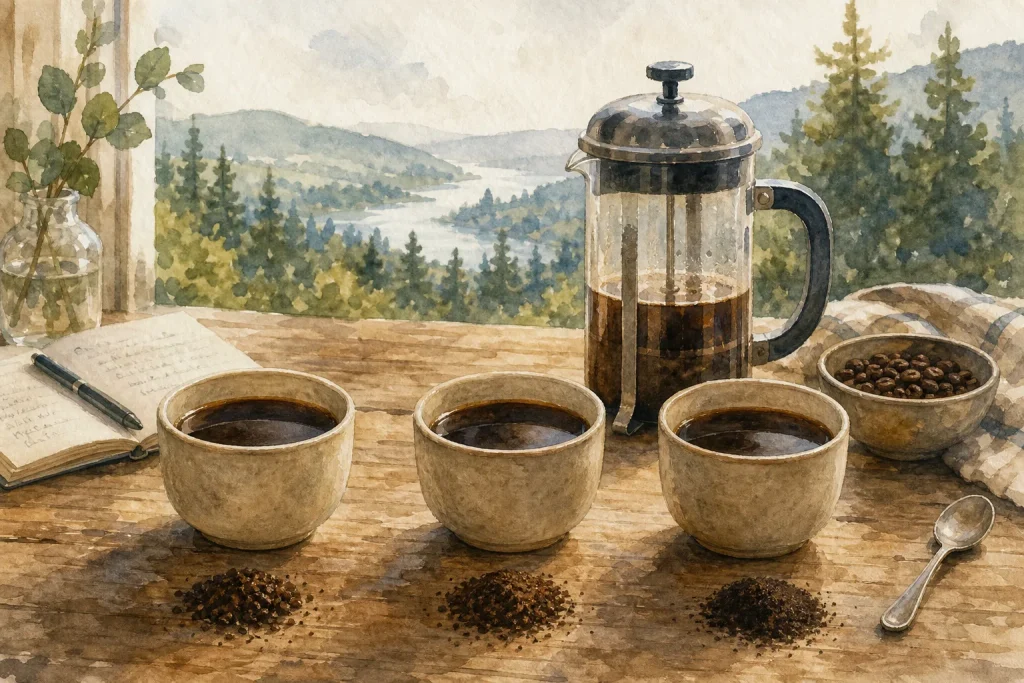
Compare an early, usual, and delayed plunge to understand how steeping time changes a French press cup—and choose by taste, not by a fixed rule.
Coffee · 7 min read
With a French press, leaving the coffee in contact with water after it seems ready keeps changing the cup. Pressing earlier can leave it lighter and sharper; waiting longer often brings more body and a stronger impression of bitterness or dryness. The difference is not a test of whether you followed a correct rule. It is a choice about how much extraction and texture you enjoy, and how quickly you want to serve.
Steeping time is only one part of the result. The grind, water temperature, coffee-to-water balance, and how evenly the grounds become wet all matter too. For a useful comparison, keep those things steady and change only when you plunge. Three approaches—an early press, a familiar middle point, and a delayed press—make the effects easier to notice.
What the plunge changes
A French press is an immersion brewer: the grounds sit in the water rather than having water poured through them and away. During steeping, soluble compounds move from the coffee into the water. Pressing pushes the mesh filter through the grounds, separating most of them from the drink. It does not stop extraction entirely. Fine particles and some grounds can remain in the brewed coffee, and the drink will continue to change if it sits with them.
The plunger is therefore a separator, not a switch that makes extraction begin or end at a precise instant. Pressing also stirs the bed of grounds and can send some sediment into the liquid, especially if you force it down. A slow, even press helps keep the process calm; once the plunger reaches the bottom, pouring the coffee into cups or a serving vessel limits further contact with the grounds.
Longer steeping commonly brings a fuller, more concentrated impression, but it does not simply make every cup better or stronger in the same way. A coffee that tastes thin at one timing may seem more rounded after a little longer. Another may become harsh, drying, or less distinct. Those impressions depend on the coffee and on the rest of the brewing choices.
Three timing choices
Early press
Pressing earlier suits someone who prefers a lighter-bodied cup, wants to move from brewing to pouring promptly, or finds a usual French press brew too heavy. An earlier plunge can preserve a brisk, bright impression, though the cup may also seem sour, hollow, or underdeveloped if the coffee has not had enough contact with water. These are cues, not verdicts: a naturally lively coffee may still taste pleasant and balanced to you.
Try this approach when your cup feels dense or lingering in a way you do not enjoy. Keep the grind and water amount as they are, then move the plunge earlier on the next brew. If the result becomes clearer and remains satisfying, that timing may suit your coffee and palate. If it turns thin or sharply sour, return towards a longer steep rather than changing several variables at once.
Familiar middle
A middle timing is a useful reference point: long enough for the grounds to infuse, but not so long that the brewer is left unattended for an extended stretch. It suits people who want a dependable starting place for everyday brewing and a neutral baseline for later comparisons. The exact point is not universal, so use the instructions for your coffee or brewer as a starting suggestion rather than a law.
Once you have a cup you enjoy, make small adjustments around it. If the coffee tastes too light, allow a little more steeping before pressing. If it feels dry or rough, try pressing sooner and pouring promptly. A change in one direction at a time is easier to interpret than altering steeping, grind, and water temperature together.
Delayed press
A delayed plunge suits drinkers who like a heavier mouthfeel and are willing to wait for the brew before serving. It can make a cup seem more rounded or intense, but the longer contact may also accentuate bitterness or a drying finish. If you prefer a delicate, clean-tasting cup, a long wait may add little that you want.
Leaving the brewed coffee in the press after plunging is a separate choice from waiting to plunge. The filter may hold back most of the grounds, but fine particles remain, and the coffee can keep developing in the vessel. For a delayed-plunge brew, press gently when ready and pour what you plan to drink. If you want to serve later, transfer the coffee to a warmed carafe or another vessel rather than leaving it over the settled grounds.
A fair comparison
To compare timings, use the same beans, grind, water, and serving cups for each attempt. A medium-coarse grind is a common French press starting point; if yours is much finer, sediment and a rougher texture may distract from the timing difference. Use fresh water that is hot but not fiercely boiling, and wet the grounds evenly. Consistency matters more than elaborate equipment: a kettle, a spoon, a timer, and the press are enough.
Say you have a medium-roast coffee that tastes heavy when brewed by your usual method. Make one cup at your familiar timing, then prepare the next with the same amount of coffee and water but plunge earlier. Pour each brew into a separate cup and taste them side by side once they are comfortable to sip. If the earlier cup feels cleaner but a little thin, try a timing between the two on another day. The expected observable result is a change in body and finish that you can describe, not proof that one timing is objectively superior.
For a more careful comparison, keep notes in plain language: “bright, light, short finish” or “full, rounded, dry aftertaste”. Avoid trying to judge while one cup is much hotter than the other; heat can make aromas and flavours harder to compare. If the cups cool at different rates, take another sip later, when they are closer in temperature.
There is no need to split a single brew into several timed samples unless you enjoy the exercise. Scooping coffee out part-way through can disturb the grounds and complicate the comparison. Separate brews are simpler and easier to repeat, even if ordinary kitchen conditions mean they will not be perfectly identical.
Read the cup
Use taste and texture together. A cup that seems sour, thin, or unfinished may benefit from a longer steep, a slightly finer grind, or more even wetting. Change only one of these at a time so you can tell which adjustment helped. If the flavour is bitter or the finish dries your mouth, try a shorter steep or a coarser grind. A very fine grind can also make a French press cup gritty, which may feel unpleasant even if the flavour is otherwise appealing.
Not every sharp or bitter note comes from the plunge. The coffee itself may have a bright or intense character, and water that is too hot or an uneven pour can affect the cup. If the timing changes do not address the taste you dislike, return to your familiar steep and adjust another brewing choice on a separate brew. There is little value in chasing a perfectly clean cup by repeatedly altering every variable; the goal is a cup you want to drink.
Pressing technique deserves a little attention, but not fuss. Lower the plunger steadily, without leaning your weight on it. If it meets strong resistance, forcing it can churn the grounds and push more sediment through the mesh. A gentler press is easier to control. If the filter feels clogged, check that the grind is not excessively fine next time.
Choose by preference
Choose an early press if you value a lighter feel and quick serving, and your coffee still tastes complete at that timing. Choose a familiar middle timing if you want a repeatable starting point that leaves room for small adjustments. Choose a delayed press if you enjoy a fuller cup and do not mind waiting, while watching for a dry or bitter finish. These are tendencies, not promises; the same timing can taste different with another coffee or grind.
When a brew pleases you, keep its timing and method as a personal reference. When it does not, describe the problem before changing anything: too thin, too sour, too heavy, or too drying. Then adjust the plunge in the direction that seems most relevant and taste again. The useful moment is not the one printed on a timer; it is the point at which the cup has the body and finish you prefer.