Cold-Brew Coffee Without the Guesswork
A clear method for making cold-brew coffee, with practical fixes for weak, bitter, cloudy or awkwardly strong results.
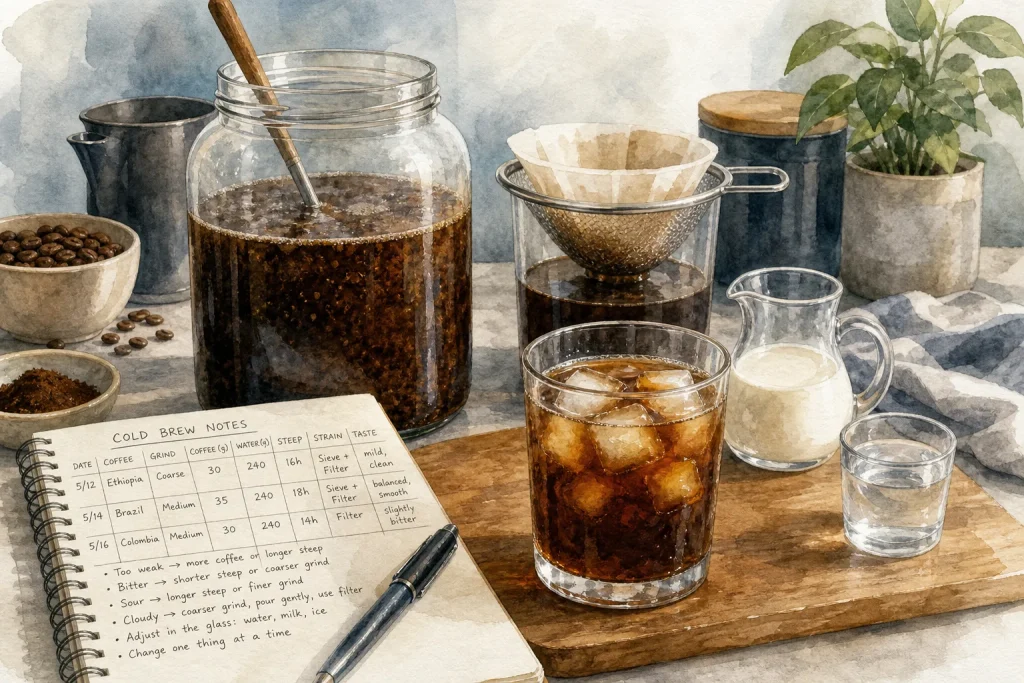
A clear method for making cold-brew coffee, with practical fixes for weak, bitter, cloudy or awkwardly strong results.
Cold Drinks · 5 min read
Cold-brew coffee is easier to adjust when you keep a note of the grounds, water, steep and straining method. There is no single ratio or steep that suits every bean and serving style, so treat the first batch as a starting point rather than a fixed recipe. Taste the strained coffee before changing anything.
Choose a starting method
Use a kitchen scale if you have one, and write down the weights you choose. For a small trial, you might combine 30 grams of ground coffee with 240 grams of cool water; this is an invented starting quantity, not a universal proportion. If you want coffee ready to pour rather than a concentrate, use more water. The result will be gentler, though you may prefer to adjust it after tasting.
Choose a clean jar or jug with room to stir. Add the grounds, pour in the water and stir until the grounds are wet. Cover the vessel and place it in the fridge. Begin by checking the flavour after an overnight steep, then strain when it tastes balanced to you. Grind size, coffee and fridge conditions can all affect the result.
Freshly ground beans can be convenient, but pre-ground coffee can work too. Medium or coarse grounds are usually easier to strain than powder-fine ones. If you do not have a grinder, ask for a coarse grind when buying beans for cold brew.
Weak or watery coffee
A thin result can reflect a mild coffee-to-water proportion, a coarse grind or a short steep, but taste alone cannot identify the cause with certainty. Check your notes first. If you measured by scoops, remember that a scoop can hold different amounts as grind size changes; weighing makes batches easier to compare.
For the next batch, keep the grind and steep unchanged while you adjust the amount of coffee or water. If the result is still too mild, try a slightly finer grind or a longer steep in a separate batch. Change one detail at a time so you can tell which adjustment suits your preference. Once the coffee is strained, adding grounds will not reliably correct it; serve it as a mild drink or blend it with stronger coffee if you have some.
Bitter or harsh flavour
Harshness may come from a concentrated serving, a long steep, fine grounds or the coffee’s own flavour. Start by adding cool water to a small glass. If the taste becomes pleasant, serve the rest more diluted. If it remains harsh, try a shorter steep or coarser grind in the next batch, changing one at a time.
Say you have a strained jar that tastes sharp and heavy. Pour a small serving over ice, add cool water gradually and taste after each addition. If the drink becomes pleasant, use that serving as a guide for the rest of the jar. If the harshness remains, note the result and try a shorter steep next time rather than relying on sweetener to mask it.
Sour or flat results
A sour, underdeveloped taste can be associated with a coarse grind, a short steep or incomplete contact between water and grounds. Stir the mixture at the start so dry pockets do not remain. In the next batch, try a slightly finer grind or a longer steep, changing only one variable.
Flatness is different from sourness. A muted aroma may come from beans that have been exposed to air, heat or light. Keep them in a sealed container in a cool cupboard, away from the cooker and a sunny windowsill. An elaborate storage system is not worth the effort if a clean, tightly closed tin already protects the beans from those conditions.
Cloudy, gritty coffee
A little haze can remain, particularly when fine particles pass through the strainer. Grit at the bottom of the glass suggests that grounds entered the drink or were disturbed while pouring. Let the jar stand briefly, then pour slowly and leave the sediment behind.
A fine-mesh sieve catches larger grounds but may let smaller particles through. For a cleaner cup, line it with a paper coffee filter. Pour gently and do not press the grounds, which can push sediment through. If the filter clogs, use a coarser grind next time or transfer the liquid in smaller amounts.
Adjusting a serving
Try cool water, milk or a combination in the glass, tasting as you go. Ice can also soften the flavour as it melts, so judge the drink in the way you plan to serve it. For a milk-based drink, add milk after water so you can first decide whether the coffee itself needs dilution.
Imagine you have a small glass of concentrate that tastes too intense over ice. Add a splash of water, taste, then add another splash only if it remains too strong. Stop when the coffee tastes balanced to you; the amount will depend on the drink and your preference. Apply that same approach to each serving rather than assuming one fixed dilution will suit every batch.
Straining the batch
If a paper filter drains slowly, grounds may be too fine or the filter may be carrying too much at once. Let the grounds settle, then pour the liquid in smaller amounts. For another batch, try a coarser grind or a larger filter. A sieve followed by a paper filter can be easier than asking one small filter to strain the whole jar at once.
Perfect clarity is not worth pursuing if you enjoy a little body in the cup. Repeated filtering can take time without making the flavour noticeably better. A clean sieve and careful pouring may be enough for an everyday drink.
Keep useful notes
Record the coffee, grind, amounts, steep and straining method. Keep the parts that worked and change one detail in the next batch. If the coffee was weak, for example, do not also grind finer and steep longer: you would not know which change made the difference.
Store strained coffee in a covered container in the fridge and pour it with a clean utensil. Make an amount you expect to enjoy while it still tastes fresh. Notes and small adjustments are usually more useful than complicated equipment or a fussy routine.